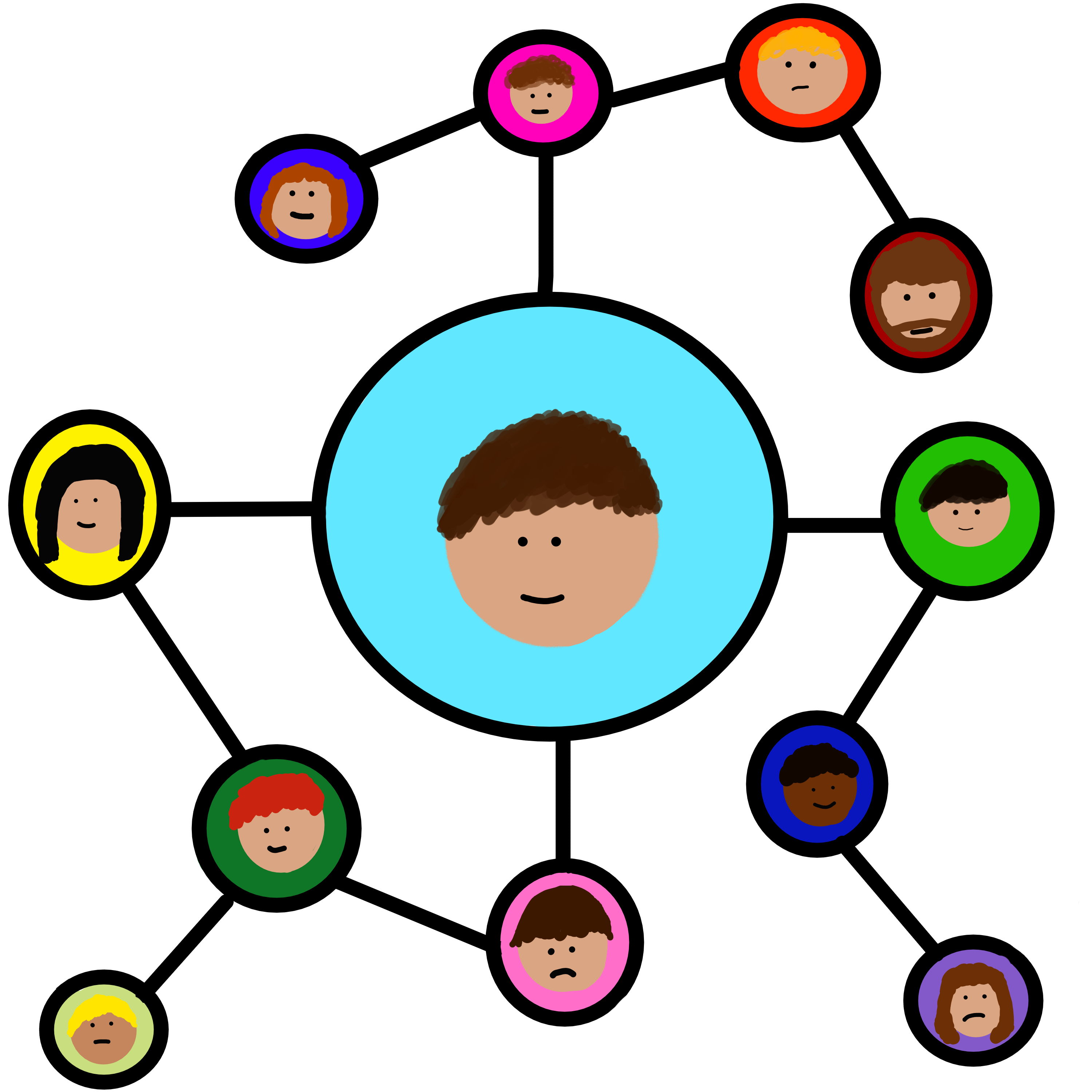
So, what is Internal Family Systems (IFS)? In short, it is a type of therapy that works with internal parts of our brains that make decisions and carry our trauma for us.
Since our brains are extremely complex, humans evolved to develop parts capable of handling different tasks for us that allow us to multitask and not be “on” all the time. Think of the last time you drove a car and didn’t really think about driving, yet you got to your destination safe and sound without issues. That was most likely a part that took over for you who is skilled at driving and drives for you so you don’t have to think about it. While there is a bit more to it than that, it is the basic premise.
Unfortunately, our society thinks of the mind as a singular entity. We think every decision we make every day is made by us, like our entire mind thought to do this. I think that that is why there is so much hate thrown around nowadays. We think the other people who do and say hateful things think that with their entire being, so it’s natural for you to hate someone for that. But think about the last time you felt conflicted about something, you probably said “Part of me doesn’t want to feel this way or do this thing,” which is something we all say but don’t necessarily think about what we are saying. In this case, you most likely have two parts who both want different things and therefore you have mixed feelings about something you may be doing. In IFS, I have had conflicting parts and I’ve worked to acknowledge these parts and find a solution to a problem.
So, when I first met with my therapist, he walked me through the core concepts of IFS and how most of the work is internal, and rather than him asking me the questions we see on TV all the time like “And how did that make you feel?”, my “Self” would instead be the therapist for my parts and my therapist would instead be guiding me and ensuring I stay in Self.
What is “Self”? Well, that is the center of IFS and the center of every person on Earth. “The Self in IFS is defined by the “8 C’s” and “5 P’s”. The 8 C’s are Curiosity, Compassion, Calm, Clarity, Courage, Confidence, Creativity, and Connectedness. The 5 P’s are Presence, Perspective, Patience, Persistence, and Playfulness.”1 These are the core of everyone, and if everyone was more in tune with their Self and these emotions, perhaps the world would be a nicer place.
Parts are the subpersonalities that control our day-to-day actions. They have their own thoughts and feelings, and take what we have learned and use that to protect us. Think of the fight or flight response. A part is responsible for both, and they will do what they think is right to protect you.
There are 3 main types of parts: Protectors, exiles, and fire fighters.
Exiles are the parts of us that carry deep trauma. Maybe when you were younger you wanted to share something special with another person and they made you feel bad about it. It caused this exile to feel extremely self-conscious and sad about what happened, but it stuck with this part for years. They are pushed down by the protectors and tried to keep in check because protectors know exiles can cause your whole system to go out of wack, like an anxiety attack or a depressive episode. IFS tries to target these parts to break the cycle of depression or anxiety so the exiles can go on to do the things they were meant to do and become valuable in the system.
Protectors are very straightforward; their task is to protect. They work around the clock trying to protect us and keep us out of danger. They are also the ones that work to keep an exile from being triggered. One example is the feeling of “walking on eggshells” around someone. Maybe a parent caused some trauma in an exile, so now a protector has taken up the role of giving you anxiety around someone to avoid the exile getting triggered by this person. Unfortunately, protectors can go to extreme lengths to protect your exiles in ways that can be self-destructive. Many don’t want to do the self-destructive jobs, but they feel they have no choice because they don’t trust you (Self) to lead the system. IFS therapy revolves around working with protectors to get them to trust you to allow you to go to the exiles and help them, so the protectors can do something else if they want (though some just like to relax on the beach with a drink!)
Firefighters are the parts that go into action after an exile is triggered. This can come in many forms, like wanting to be in the dark all the time or doom scrolling for hours. They work to do anything they can to keep you from thinking about the trauma or being affected by it. This is usually self-destructive as well. Firefights sometimes come up when dealing with exiles as we are unlocking the trauma and it could very well affect the system. It sucks when this happens but is worth it in the end.
A typically therapy session will go like this:
My therapist asks me how I am doing and if I noticed any parts this week. We then go to those parts and reach out to them. When they respond and I’m with them, he asks me to notice how I feel towards the part. When a thought or emotion comes up not related to the 8 C’s or some other positive emotion, my therapist knows it is a part. We try to work with that part and find out what is wrong. He asks what this new part’s concern is, and we work to address their concerns. Typically, it is just assuring the new part that my Self is strong enough to protect my system from the other part’s trauma or protection, then we ask it to take a step back and allow us to work. They almost always agree to step back, and usually don’t jump in unless they are concerned the system might be affected. If they don’t agree to let us continue working, we work with them and try to gain a better understanding of their concerns until they are comfortable. We never move past a part’s concern since that could cause more issues down the line. We want them to trust us and allow us to do the work, and brushing off their concerns could cause them to lash out in the future.
Though I can’t say IFS will work for everyone, I can say it’s really changed my life. Though still struggle with depressive feelings sometimes, it has definitely gotten better and doesn’t last as long. I encourage anyone to try it who hasn’t, but if you don’t think that it will work for you, I still recommend trying an alternative form of therapy too! You don’t have to have had major trauma or are having a mental health crisis (in fact, PLEASE don’t wait for that, it’s better to try therapy first before you’re having a crisis). I know it is scary, but I promise it will be worth it.
I’ll be posting about my story doing IFS and getting into some deep stuff. I’ll try to put a Trigger Warning on things, but I may miss things that I may not think of. But I hope this helps you or someone you know try therapy, and I hope my feelings and experiences resonate with you.
 My IFS Story
Leave a comment